Refer a friend to Duo Dental Clinic and receive a gift card as our thank you!
September 2, 2026
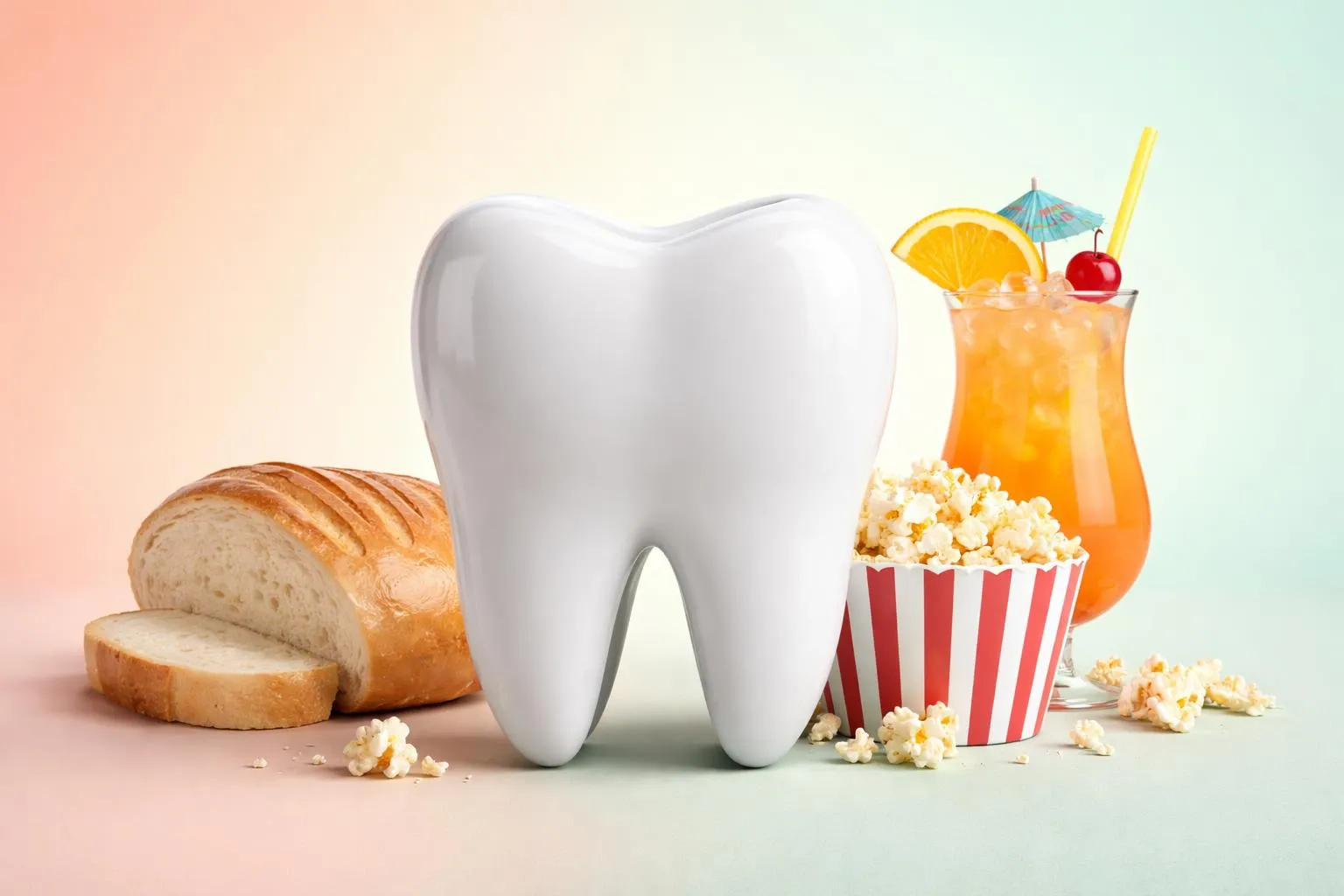
When most people think about tooth decay, they picture candy, soda, and desserts. Fair enough. Sugar gets blamed a lot because it deserves some of it.
But sugar is not the whole story.
Some everyday foods and drinks that do not seem especially sweet can still raise your risk of cavities. White bread, popcorn, and alcohol are good examples. None of them usually set off the same alarm bells as gummy candy. Still, each can create the kind of mouth environment that cavity-causing bacteria love.
I think this catches people off guard because these are normal, familiar things. Toast at breakfast. Popcorn during a movie. A drink at dinner or on the weekend. Nothing about that feels extreme. Yet oral health problems often build from ordinary habits, not dramatic ones.
The good news is that you do not need to ban these things forever. You just need to understand what they do in your mouth and how to lower the risk.
Tooth decay happens when bacteria in your mouth feed on carbohydrates and produce acids. Those acids weaken enamel, the hard outer layer of the tooth. If this keeps happening without enough recovery time, the enamel starts to break down and a cavity can form.
People often hear "carbohydrates" and think only of sweets. But starches count too. So do foods that cling to teeth or get trapped near the gums. And saliva matters more than most people realize, because it helps wash away food particles and neutralize acid.
That is why white bread, popcorn, and alcohol can all be trouble, just in different ways.
White bread turns into simple sugars quickly. Popcorn gets stuck in awkward places. Alcohol dries the mouth and often brings sugar and acid along with it.
Same outcome, different route.
White bread seems harmless. It is soft, bland, and not usually thought of as a "treat." But refined bread is basically a fast snack for oral bacteria.
When you chew white bread, the starch begins breaking down in your mouth. Saliva contains enzymes that start converting those starches into simpler sugars almost right away. So even though white bread does not taste sugary, your mouth processes it in a way that gives bacteria fuel.
There is another issue too. White bread tends to get gummy and sticky when chewed. Those soft crumbs can cling to the grooves of your teeth and tuck themselves between teeth, especially if you eat quickly or do not drink water with meals. That leaves a coating of fermentable carbohydrate sitting on the tooth surface.
Bacteria love that.
Over time, frequent exposure can lead to more plaque buildup and more acid attacks on enamel. If brushing and flossing are inconsistent, the risk goes up further.
Usually, yes, though "better" does not mean "free pass."
Whole grain bread tends to be less refined and often breaks down more slowly than white bread. It may also be less sticky, depending on the type. That can make it a friendlier option for your teeth than soft, processed white bread.
Still, any bread can leave residue behind. If your lunch is a sandwich and you brush later in the day, that is usually manageable. If you snack on soft crackers, bread, or toast all day long, your teeth get repeated exposure without enough downtime.
Frequency matters a lot. A food is often less damaging when eaten with a meal than when nibbled over hours.
You do not need to fear bread. Just be a little smarter about it.
Choose less refined options when you can. Drink water with meals. Avoid grazing on starchy snacks throughout the day. And if bread tends to stick to your teeth, it is worth paying attention to that feeling. Your mouth is giving you useful information.
Popcorn has a healthy reputation, and in some ways it earns it. Plain popcorn is a whole grain, and it can be a lighter snack than chips or candy.
Your teeth may not agree.
Popcorn causes problems because of its texture and structure. Hulls and broken kernel pieces can wedge themselves between teeth or slide under the gumline. Once stuck there, they trap food debris and bacteria in one small spot. That makes localized irritation and decay more likely.
If you have ever spent half a movie poking at your gums with your tongue after a handful of popcorn, you already know this.
Sometimes it is not just annoying. Those sharp bits can irritate the gums enough to make them sore or inflamed. In some cases, a hard unpopped kernel can even chip a tooth or damage a dental restoration. Dentists see this more often than people think.
Then there are the toppings. Butter flavoring, caramel coatings, and sugary add-ons turn popcorn into an even better food source for cavity-causing bacteria. Sweet popcorn is the obvious one, but buttery popcorn can leave a greasy film that helps other particles hang around longer too.
This is one of those places where perfection is unrealistic. People are not going to stop eating popcorn forever because of a blog post, and honestly, that is fine.
What matters is what you do after.
If popcorn gets stuck in your teeth, rinse with water soon after eating it. Flossing is even better, especially before bed. Brushing helps too, but floss is what actually gets the hulls and kernel fragments out from between teeth and near the gums.
A few practical habits help a lot:
Choose lightly salted or plain popcorn more often than caramel or heavily coated varieties.
Sip water while eating it.
Floss after movie night, even if you are tired.
Avoid biting down hard on unpopped kernels.
That last one sounds obvious until it happens. One wrong crunch and the whole evening changes.
Alcohol is often discussed in terms of liver health, sleep, or dehydration. Oral health usually gets left out. That is a mistake.
One of alcohol's biggest effects on the mouth is reduced saliva flow. Saliva is not glamorous, but it does a lot of quiet work. It helps rinse away food particles, buffers acid, and supports the natural repair process that protects enamel. When your mouth gets dry, all of that becomes harder.
A dry mouth gives bacteria an advantage.
After drinking, you may notice sticky lips, bad breath, or that coated feeling on your teeth the next morning. That is not just unpleasant. It is a sign that your mouth has less of its usual protection.
Alcohol on its own is one issue. Mixed drinks can pile on another.
Cocktails made with soda, juice, syrup, energy drinks, or sweet liqueurs can expose teeth to a lot of sugar. Bacteria ferment those sugars and produce acid. If you sip slowly over a long evening, the exposure lasts even longer.
Some alcoholic drinks are acidic too, which means they can contribute to enamel wear as well as decay risk. If you want a deeper look at how beverages affect your teeth, this guide on coffee, wine, and protecting your smile covers staining and erosion in a useful, practical way.
In the short term, alcohol can leave your mouth dry and more acidic, especially if you drink without water or have sugary mixers.
Over the long term, frequent heavy alcohol use can be linked with worse oral health habits overall. People may brush and floss less consistently, snack more late at night, or ignore early symptoms like sensitivity and gum bleeding. Chronic exposure to acidic drinks and dry mouth can wear down the mouth's defenses.
That does not mean every social drinker is heading for cavities. It means the pattern matters.
A glass of wine with dinner is different from several sugary drinks over hours, followed by falling asleep without brushing. Your teeth notice the difference.
White bread, popcorn, and alcohol look unrelated, but they share one thing: they make it easier for plaque bacteria to do their job.
Here is the simple version.
Plaque is a sticky bacterial film that forms on teeth all the time. When it gets frequent access to starches and sugars, it produces acid. When food particles stay stuck in place, plaque gets more time to work. When saliva drops, the mouth loses some of its natural cleanup crew.
That combination can lead to:
more plaque buildup
more acid production
greater cavity risk
enamel erosion
gum irritation
trapped debris near the gumline
bad breath and dry mouth symptoms
It is rarely one meal that causes the problem. It is repetition.
A sandwich at lunch is not the issue by itself. Neither is popcorn on Friday night or a drink at a celebration. Trouble starts when these things happen often and oral care does not keep pace.
This is the part I like, because prevention is usually less dramatic than people expect. You do not need a complicated routine. You need a few habits you can stick with.
If white bread is a daily staple, try switching some of the time to whole grain options that are less refined and often less sticky. More important, avoid constant snacking on bread, crackers, or chips through the day.
Your teeth need breaks between acid attacks.
Not every snack deserves special cleanup. Popcorn does.
Rinse with water after eating it. Floss when you can, especially if you feel something stuck. If a hull is lodged under the gum and you cannot remove it gently, do not dig at it with a sharp object. That usually makes things worse.
Alternating alcoholic drinks with water is good for your mouth and your body. It helps with hydration and can reduce that dry, sticky feeling that sets the stage for trouble.
If you do drink, less sugary mixers are usually better for teeth than soda-heavy cocktails or syrupy drinks.
Chewing sugar-free gum can stimulate saliva, which helps clear food particles and dilute acids. This is especially useful after eating starchy foods or when brushing is not possible right away.
It is not a replacement for brushing or flossing, but it is a helpful backup.
This is the unsexy answer, but it works.
Brush twice a day with fluoride toothpaste. Floss daily. Try not to skip your nighttime routine. Most people do not get cavities because they failed once. They get them because small lapses become normal.
Professional cleanings remove plaque and tartar you cannot get off at home. Regular exams also catch early signs of decay, enamel wear, and gum problems before they become expensive or painful.
That matters because food trapping and dry mouth can create very specific problem spots. A small cavity between teeth often does not hurt at first.
You do not need to panic over every sensitivity twinge, but some signs are worth paying attention to.
Watch for:
food frequently sticking between the same teeth
sore or bleeding gums after popcorn
persistent dry mouth
increased sensitivity to cold, sweets, or brushing
rough spots on teeth
bad breath that does not improve with brushing
These symptoms do not always mean a cavity is present, but they are good reasons to take a closer look at your habits and, if needed, book a dental visit.
The bigger point here is not that white bread, popcorn, and alcohol are "bad." I do not love food morality language anyway. It makes people tune out.
The real point is that tooth decay is more complicated than a simple sugar warning. Refined starches can act like sugar. Trapped food can create concentrated trouble in one spot. Dry mouth can weaken your mouth's natural defenses.
Once you know that, the fix is not extreme. It is just more intentional.
Eat bread with meals instead of grazing on it all afternoon. Floss after popcorn. Drink water when you drink alcohol. Pick less sugary mixers. Brush with fluoride toothpaste, floss daily, and do not ignore a mouth that feels dry or irritated all the time.
That is not a dramatic health overhaul. It is maintenance. Quiet, ordinary maintenance. And honestly, that is what protects teeth most of the time.
Cavities are not caused only by candy.
White bread can break down into sugars and cling to teeth. Popcorn can get trapped at the gumline and between teeth, where bacteria get extra time to work. Alcohol can dry out the mouth and often comes with sugar and acid, especially in mixed drinks.
If you know those risks, you can work around them without giving up every comfort food or social habit you enjoy. A few smart changes, done consistently, go a long way.
Get Started Today
Your oral health matters. Whether you’re visiting for preventive care or urgent treatment, our experienced and caring team is here to help.
.svg)