Refer a friend to Duo Dental Clinic and receive a gift card as our thank you!
May 3, 2026
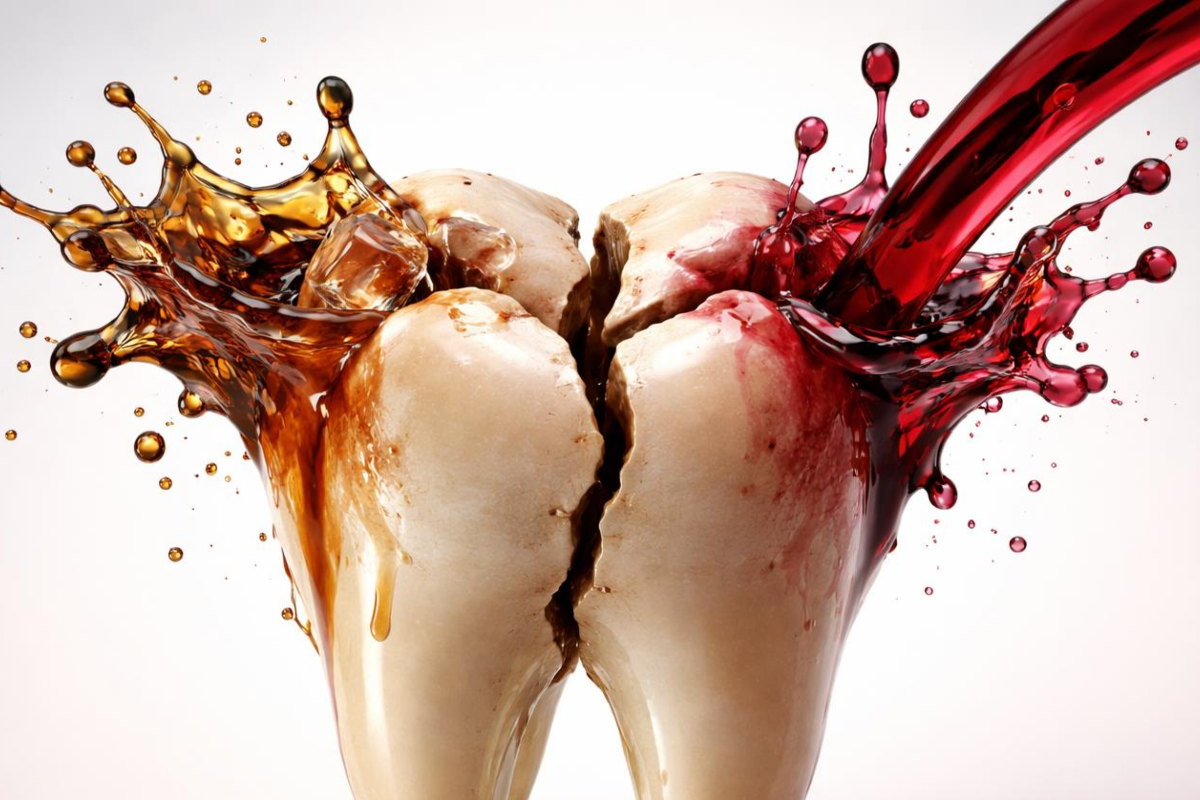
If you drink coffee every morning or enjoy a glass of wine with dinner, you’ve probably had the same thought at some point: what is this doing to my teeth?
The short answer is, both coffee and wine can affect your smile. They can stain teeth, dry out your mouth, and in some cases wear down enamel over time. That said, this is not a lecture telling you to give up everything you enjoy. Most people are not choosing between perfect white teeth and a pleasant life. They want practical advice, and that’s the useful conversation.
Coffee and wine are not identical when it comes to dental effects, either. They cause problems in different ways, and that matters. If you understand what each one does, you can make smarter choices without turning every meal into a science project.
Before getting into coffee and wine separately, it helps to know what teeth are up against.
The outer layer of your teeth is enamel. It’s strong, but it isn’t indestructible. Under that enamel is dentin, which is naturally more yellow. When enamel gets thinner or rougher, stains stick more easily and the darker color underneath can show through more.
There are two main issues here:
This happens when colored compounds from food or drinks stick to the outer surface of teeth. Some stains sit on the surface and can be polished off during a cleaning. Others work their way into tiny microscopic irregularities in enamel and become harder to remove.
Acidic drinks can soften enamel. If that happens often, enamel can slowly wear away. Once enamel is gone, your body does not grow it back. That’s the part people tend to underestimate. Staining is annoying. Erosion is a bigger deal because it can lead to sensitivity, rough edges, and a duller-looking smile.
Coffee and wine can contribute to both problems, but not in the same way.
Coffee gets blamed for stained teeth all the time, and honestly, the reputation is deserved. It’s one of the most common causes of external staining.
Coffee contains dark pigments called chromogens. It also contains tannins, which are natural compounds that make it easier for color to stick to your teeth. If you’ve ever noticed that coffee leaves a brown ring in a mug, your enamel is not magically immune to the same logic.
Teeth aren’t perfectly smooth. They have tiny pits and grooves. When you sip coffee regularly, especially over a long stretch of time, those pigments have repeated chances to settle in.
Many coffees are mildly acidic. That acidity can soften enamel a bit, especially if you drink coffee frequently throughout the day. The issue is usually not one morning cup. It’s the person who keeps topping up a mug for five hours.
That kind of constant exposure matters more than people think. Your mouth has a built-in repair system, saliva, but it needs time to do its job. If teeth stay in a low-acid environment all morning, they don’t get much recovery time.
Caffeine can reduce saliva flow in some people. Dry mouth means less natural washing action and less buffering against acid. Saliva helps clear pigments and protect enamel. Less saliva means stains and acid get more time to hang around.
Milk can lighten the color of coffee and may slightly reduce how aggressively pigments show up on teeth, but it does not make coffee harmless. If you add sugar or flavored syrups, you’re also feeding the bacteria that contribute to cavities. So a pale latte may stain less than black coffee, but it can bring its own problems.
Wine is a little trickier. People often focus on red wine because of the color, but white wine can be rough on teeth too, just in a different way.
Red wine contains deep pigments and tannins, which makes it a strong stainer. Tannins increase the chance that color sticks to enamel. Red wine also tends to be acidic, which can slightly roughen the tooth surface and make it easier for stains to cling.
That one-two combination is why red wine can leave such visible discoloration over time.
If you’ve ever looked in the mirror after a glass of cabernet and thought, “That can’t be great,” that instinct was correct.
White wine usually doesn’t stain teeth the way red wine does because it lacks dark pigments. But it is often more acidic than people expect. That acid can soften enamel and make teeth more vulnerable to staining from other foods and drinks.
So if you drink white wine and then have berries, tomato sauce, or coffee later, your teeth may pick up color more easily. White wine can act like the opener, even if it doesn’t leave much color itself.
That’s one of those dental facts people rarely hear, and it explains why someone who mostly drinks white wine can still notice more discoloration over time.
Sparkling wines bring acidity and carbonation together. Carbonation itself isn’t automatically terrible, but fizzy drinks are usually more acidic than plain water. That can mean more enamel softening, especially if sipping goes on for a long evening.
This is the part where people want a winner, or really a loser.
The honest answer is that it depends on what you mean by “worse.”
If you mean staining, red wine and coffee are both strong offenders. Red wine often causes darker, faster visible staining. Coffee tends to create gradual yellow-brown buildup that becomes more noticeable over time.
If you mean acid wear, wine usually raises more concern because it is more acidic than coffee. White and sparkling wines deserve special attention here.
If you mean total effect in real life, habits matter more than the drink itself.
A single cup of coffee with breakfast is very different from sipping sweet coffee from 8 a.m. to noon. A glass of wine with dinner is different from multiple glasses over several hours without water. Frequency, timing, and what else is happening in your mouth can change the picture a lot.
People often think in terms of “good drink” and “bad drink,” but dentistry usually works more like this: repeat exposure adds up.
Here are the biggest habit patterns that increase the risk.
This is common with coffee and wine for different reasons. A coffee thermos at your desk. A wine glass that gets refilled during a long dinner. Every sip restarts acid and stain exposure. It’s the repeated contact that wears teeth down and leaves pigment behind.
Water helps rinse acids, sugars, and pigments. It’s simple, maybe boring, but it works. Without water, everything sits longer on your teeth.
This matters more for how you feel overall, but it can affect your mouth too. Saliva flow and chewing during meals help dilute and clear acids. Drinking acidic beverages by themselves gives your teeth less protection.
This surprises people. Brushing immediately after coffee or wine can be too harsh because enamel is softer right after acid exposure. If you scrub right away, you may wear down the surface you’re trying to protect.
If you already have thin enamel, sensitivity, reflux, mouth breathing, or medication-related dry mouth, your teeth have less of a buffer. What seems manageable for one person may cause faster damage in another.
You do not need a perfect routine. You need a realistic one you’ll actually follow.
Try to drink coffee with breakfast or in a shorter sitting instead of nursing it all morning. Same with wine. Better to enjoy it with a meal than sip slowly over hours.
This one change can make a real difference because it gives saliva time to bring your mouth back toward normal.
A few swallows of plain water help rinse away acids and pigments. If I had to pick one easy habit with the best effort-to-benefit ratio, it would be this.
Give your mouth around 30 minutes after coffee or wine before brushing. If the drink was especially acidic, waiting a bit longer can help. In the meantime, rinse with water.
For iced coffee, a straw can reduce contact with the front teeth. It won’t make the drink invisible to your mouth, but it may cut some staining exposure.
For wine, a straw is technically possible and socially divisive. I’ll leave that to your personal bravery. Most people won’t do it, and that’s fine.
This sounds obvious, but some people really do hold wine in the mouth to “taste” it longer or move coffee around absentmindedly. More contact time means more staining and acid exposure.
Food stimulates saliva and can reduce the intensity of direct acid contact. Cheese, nuts, and fibrous vegetables can be especially mouth-friendly during a meal. They are not magic antidotes, but they help.
Whitening toothpastes can help with mild surface stains, but many are abrasive. If you already have enamel wear or sensitivity, aggressive whitening products can make your teeth feel worse. Whitening strips and gels may work well for some people, but they do not fix erosion, and they can increase sensitivity.
If your teeth are staining repeatedly because of daily habits, whitening alone becomes a loop: whiten, stain, repeat. It’s better when paired with a few preventive changes.
Some coffee and wine stains sit on the surface and can be removed during a professional cleaning. That won’t stop future staining, but it does reset the situation.
Basic oral care still matters a lot here. Maybe that sounds almost too ordinary, but ordinary habits do most of the work.
Brush twice a day with a fluoride toothpaste and a soft-bristled brush. If your teeth are sensitive, look for a toothpaste made for sensitivity or enamel protection.
Flossing won’t stop coffee stains on front teeth, but it helps prevent plaque buildup between teeth, and plaque tends to grab onto stains. Cleaner tooth surfaces are harder to stain than rough, neglected ones.
An alcohol-free fluoride mouthwash can help if you are prone to dry mouth or enamel wear. Be a little cautious with strongly acidic or heavily colored rinses. They are not all created equal.
A little staining is common. Some changes are a sign to pay closer attention.
Watch for:
If you notice the second group, especially sensitivity and surface changes, think beyond whitening. That points more toward enamel wear than simple staining.
This is where I wish the answer were easier.
Enamel that has been worn away does not grow back. Early acid softening can sometimes be stabilized and the surface can be strengthened with fluoride and good habits, but actual lost enamel is lost. That’s why prevention matters more than people assume.
Stains, on the other hand, are often manageable. Some can be polished away, some respond to whitening, and some are stubborn enough to need more than over-the-counter products. The earlier you deal with them, the simpler it usually is.
Usually no. Brushing harder can wear enamel and irritate gums. Stains are not improved by aggression.
Also no. White wine may stain less directly, but its acidity can make teeth more vulnerable.
It may reduce some staining intensity, but coffee can still stain, and sugary add-ins can raise cavity risk.
Not always. Teeth can be white and still be sensitive, worn, or weakened. Appearance tells only part of the story.
If you love coffee or wine, the goal is not perfection. It’s damage control that fits real life.
Drink them with intention rather than all day. Rinse with water. Wait before brushing. Keep your daily oral care steady. Pay attention if you notice sensitivity, roughness, or stains that keep returning fast.
And maybe this is the most human answer of all: if coffee makes your mornings bearable and wine makes dinner more enjoyable, you do not need guilt layered on top. You just need to know the trade-offs. Teeth do better when habits are thoughtful, even if they are not flawless.
That’s good news, because thoughtful is a lot easier to live with than flawless.
Get Started Today
Your oral health matters. Whether you’re visiting for preventive care or urgent treatment, our experienced and caring team is here to help.
.svg)