Refer a friend to Duo Dental Clinic and receive a gift card as our thank you!
July 18, 2026
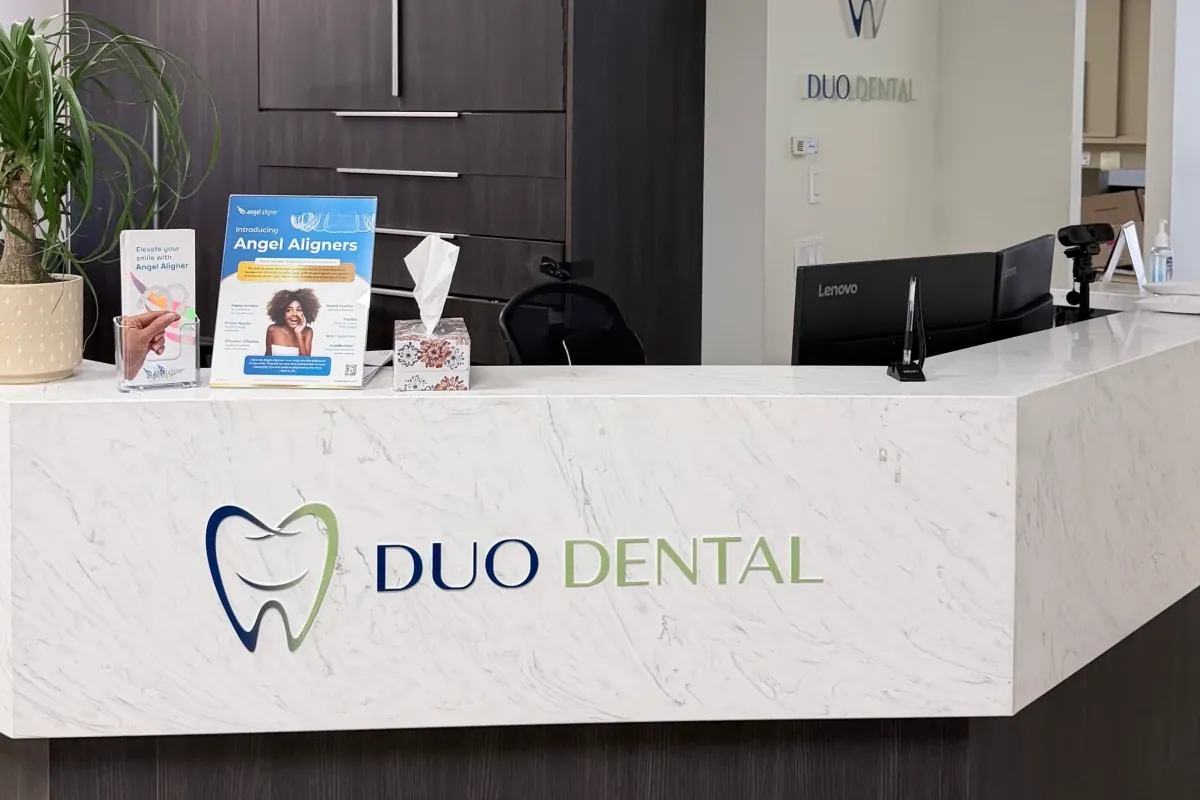
Choosing a dental clinic sounds simple until you actually try to do it.
Most people start with a practical question. Is it close to home? Then the real questions show up. Can they handle more than cleanings? Will I need to run around to specialists? Can I actually get an appointment that works? If I qualify for the Canadian Dental Care Plan, will they accept it?
Those details matter more than the glossy stuff.
In North Vancouver, patients have options. That is a good thing. But it also means clinics need to earn trust in very real ways. What makes Duo Dental different is not one flashy feature. It is the combination of full-service care, three dentists working together, CDCP acceptance, and the fact that many treatments can be done without sending patients somewhere else.
That adds up to something people feel right away. Less stress. Fewer delays. A more connected kind of care.
A lot of clinics do general dentistry well. Cleanings, exams, fillings, maybe the occasional crown. That covers the basics, and for some patients that is enough.
But life rarely stays basic for long.
Teeth crack. Old dental work wears out. Wisdom teeth cause trouble. Someone wants to fix crowding, replace a missing tooth, or finally deal with a smile issue they have put off for years. When a clinic can only handle part of that, the patient ends up juggling referrals, extra appointments, new offices, new faces, and sometimes long waits.
That is where Duo Dental feels different.
Because the clinic offers full-service care, patients can come in for routine dentistry and also get support for more complex needs in the same place. Cosmetic work, restorative treatment, oral surgery, and everyday preventive care are part of the same picture, not disconnected services scattered across different offices.
This matters more than people expect.
When your care stays under one roof, the planning is often simpler. Your records are already there. The team already knows your history. You are not repeating the same story three times to three different offices. If you are nervous about dental treatment, that familiarity is a huge relief. Even confident patients appreciate it. Dental care is easier to keep up with when it feels organized instead of fragmented.
There is also a quality-of-care piece here. When the same clinic is looking at both short-term fixes and long-term oral health, treatment tends to feel more thoughtful. A tooth is not treated in isolation. Your bite, gums, comfort, and overall goals all stay part of the conversation.
Some people hear "three dentists" and think it sounds less personal. I would argue the opposite, if the clinic is set up well.
At Duo Dental, having three dentists creates flexibility that many smaller clinics simply cannot offer. It can help with scheduling, reduce wait times, and make it easier for patients to get care when they need it instead of weeks later. If you have ever tried to book around work, school pickup, travel, or a sudden toothache, you already know how valuable that is.
But the bigger difference is clinical range.
No dentist works in exactly the same way. That is not a problem. It is often a benefit. A team of three brings different strengths, experiences, and perspectives to patient care. For straightforward treatment, that may simply mean smoother access to appointments. For more involved cases, it can mean more thoughtful planning and better continuity across services.
And no, that does not have to make care feel impersonal.
In a well-run clinic, a multi-dentist team works more like a group practice than a rotating cast. Patients still want to feel known, and they should. The point is not to bounce people around. The point is to make sure the right care is available without creating unnecessary friction.
That difference matters on busy weeks, after dental emergencies, and during longer treatment plans. It also matters for families. Parents often want one clinic that can manage regular checkups, restorative needs, and those surprise moments that seem to happen right before a holiday.
Cost is one of the biggest reasons people delay dental care. That is not a moral failure. It is just real life.
Even when someone knows they should book an exam or deal with a nagging issue, finances can push it down the list. Then a small problem becomes a more painful, more expensive one later. Dentists see this all the time.
That is why CDCP acceptance matters.
When a clinic accepts the Canadian Dental Care Plan, it makes care more accessible for eligible patients. It reduces one of the first barriers people hit when deciding whether to book. Instead of spending hours calling around, asking if a clinic participates, and wondering whether treatment will be covered, patients can move forward with more clarity.
There is also something quietly important about the message this sends.
A clinic that accepts CDCP is making room for more people to get care. It says dental health is not just for patients with easy insurance or flexible budgets. That practical openness makes a difference in the community, especially for people who have postponed care and feel embarrassed about coming back.
And that embarrassment is common. More common than many people admit.
Good dental clinics understand that patients do not arrive as perfectly organized versions of themselves. They come in after missed cleanings, busy seasons, job changes, family stress, or years of avoidance. Meeting people where they are matters. Accepting CDCP is one concrete way to do that.
Referrals are sometimes necessary. Certain cases need a specialist setting, and a good clinic should say so clearly.
But not every referral is about complexity. Sometimes it is just about scope. A clinic does not provide a service, so the patient has to go elsewhere. That may sound minor on paper. In practice, it often slows everything down.
You leave one office with a recommendation. Then you wait for another call. Then you arrange another consultation. Then maybe another treatment appointment after that. If you are lucky, it all moves quickly. If not, weeks pass.
At Duo Dental, many treatments can be done without that extra handoff. For patients, that means less waiting and fewer moving parts. It also means fewer chances for momentum to disappear.
That last part is easy to overlook. People are most likely to follow through on treatment when the path feels straightforward. If every next step becomes another office, another form, another consultation fee, some patients delay. Others give up completely until the problem gets worse.
Keeping care in-house when appropriate helps people move from diagnosis to treatment with less friction. It also gives patients a simpler emotional experience. You do not have to keep getting used to new environments or retelling your concerns to unfamiliar teams. If dental visits make you uneasy, that continuity can be the difference between coping and cancelling.
These features sound practical because they are practical. But they also shape how a clinic feels.
A full-service practice with three dentists, CDCP acceptance, and fewer referral hurdles usually creates a smoother patient experience. That phrase gets thrown around a lot, but here it really means simple things.
You can book care without jumping through hoops.
You are more likely to get treatment in one place.
You have options if your schedule is tight.
You do not have to start over every time your dental needs change.
For a new patient, this can make the first visit less intimidating. For an existing patient, it creates continuity that pays off over time. Your dental history does not live in fragments across different providers. Your care has a home base.
There is another point worth making. Convenience is not shallow.
Sometimes people talk as if the only thing that matters is clinical skill and everything else is secondary. Clinical skill absolutely matters. A lot. But ease matters too. Access matters. Whether a patient can actually follow through matters. If a clinic makes good care easier to receive, that is not a side benefit. It is part of the care itself.
The strongest clinics are not just places you visit when something goes wrong. They become part of how you stay well.
That is the deeper difference with Duo Dental. The clinic is set up to support ongoing care, not just one-off appointments. When patients can handle routine visits, restorative work, cosmetic treatment, and many surgical needs in one familiar setting, dentistry starts to feel less reactive. You are not constantly scrambling for the next provider. You are building continuity.
For some people, that means finally replacing a tooth they have ignored for too long. For others, it means getting answers about pain without weeks of referrals. For families, it may simply mean having one trusted clinic that can handle more than the basics.
None of this is especially dramatic, and that is kind of the point.
Good dental care should not feel complicated for the patient. It should feel clear, capable, and consistent.
What makes Duo Dental different from other North Vancouver clinics is not a slogan. It is the structure of the care itself.
Full-service treatment means patients can handle more in one place.
Three dentists means stronger access and broader support.
CDCP acceptance makes care easier to reach for eligible patients.
No referrals needed for many services means fewer delays and less hassle.
Put together, those things create a clinic experience that feels more connected and easier to trust.
And honestly, that is what many people want from a dental office. Not hype. Not pressure. Just a place that can take care of what they need, when they need it, without making the process harder than it has to be.
Get Started Today
Your oral health matters. Whether you’re visiting for preventive care or urgent treatment, our experienced and caring team is here to help.
.svg)