Refer a friend to Duo Dental Clinic and receive a gift card as our thank you!
August 3, 2026
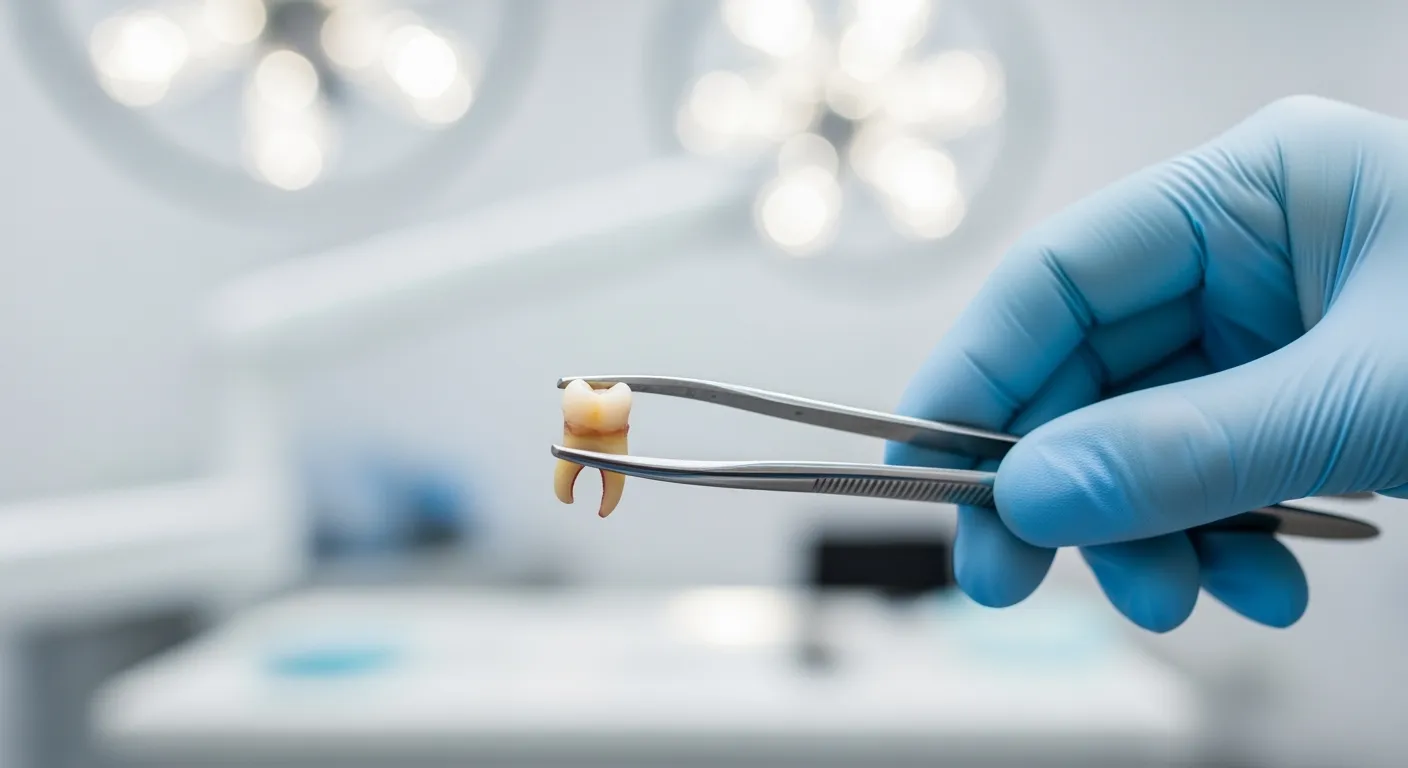
Hearing the words "you need a tooth pulled" can make almost anyone tense up. That reaction is normal. Most of us grow up thinking keeping every natural tooth is always the goal, so extraction can feel like bad news.
Sometimes it is disappointing. But it is not automatically a sign that something went wrong. In many cases, removing a tooth is the safest, healthiest choice. A badly damaged tooth can keep causing pain, spread infection, crowd other teeth, or make it harder to eat and clean your mouth properly. In those situations, taking the tooth out may solve a bigger problem, not create one.
If you have ever wondered why dentists recommend extractions, what the process involves, and whether there are other options, this guide will walk you through it in plain language.
A dental extraction is the removal of a tooth from its socket in the jawbone. That sounds dramatic, but the procedure itself can range from fairly simple to more involved, depending on the tooth and the reason it needs to come out.
There are two broad types:
This is done when the tooth is visible above the gumline and can be removed with standard dental instruments. The area is numbed first. Then the dentist gently loosens the tooth and lifts it out.
This is used when the tooth is harder to reach. Maybe it has broken at the gumline, never fully erupted, or is trapped under the gum or bone. Wisdom teeth often fall into this category. Surgical extractions may involve a small incision in the gum and sometimes removing a bit of bone around the tooth.
People often assume "surgical" means alarming. Usually it just means the tooth is less straightforward to access.
Dentists do not usually jump to extraction first. Saving the natural tooth is often preferred when it can be done safely and predictably. But there are situations where keeping the tooth does more harm than good.
Here are the most common reasons.
A cavity that stays untreated can grow deeper over time. At first, decay affects the enamel, then the dentin, and eventually the pulp, where the tooth's nerves and blood vessels are. Once decay becomes extensive, the tooth may be too weak to restore with a filling or crown.
Root canal treatment can often save an infected tooth, and that is worth exploring. But if too much of the tooth structure is gone, there may not be enough healthy tooth left to support repair. In that case, extraction may be the more realistic option.
Gum disease does not only affect gums. In more serious stages, it damages the bone and tissues that hold teeth in place. Teeth can become loose, shift position, hurt when chewing, or trap food in ways that are hard to manage.
This is one of those situations that frustrates people because the tooth itself may not look broken. But if the support around it has failed, the tooth may no longer be stable enough to keep.
A dental infection can be extremely painful, and it can become a health concern beyond the mouth if it spreads. Often, a dentist will try to treat the infection while saving the tooth if possible. But sometimes the infection is too extensive, the tooth is too damaged, or prior treatment has failed.
When that happens, removing the tooth may be the most reliable way to stop the problem.
Wisdom teeth are famous for causing trouble, and honestly, they have earned that reputation. These are the last molars to come in, usually in the late teens or early twenties. Many people simply do not have enough space for them.
An impacted wisdom tooth is one that cannot fully erupt into a normal position. It may stay partly trapped under the gum or bone, or come in at an angle. That can lead to pain, swelling, infection, damage to nearby teeth, and repeated gum irritation.
Some impacted wisdom teeth are symptom-free and can just be monitored. Others clearly need to come out.
Sometimes a tooth is healthy, but there is not enough room for everything to fit properly. This comes up in orthodontic treatment, especially when teeth are severely crowded. Removing one or more teeth can create space so the remaining teeth can be moved into better alignment.
This tends to surprise people because the extraction is not about decay or pain. It is about making the bite more functional and stable over time.
Teeth crack for lots of reasons. Trauma, clenching, large old fillings, and biting something hard can all do it. Some fractures can be repaired. Others go below the gumline or split the tooth in a way that makes it impossible to restore.
A tooth that is cracked beyond repair may be painful, unstable, and prone to infection. In those cases, removal is often recommended.
Children sometimes need extractions too. A baby tooth may stay in place longer than it should and block the permanent tooth underneath. If the adult tooth is trying to erupt in the wrong spot, removing the baby tooth can help.
That sounds unnerving for parents, but it is usually a routine part of dental development when needed.
This is the part many people care about most. Nobody wants a tooth removed if there is a reasonable way to keep it.
A dentist will usually look at several things together:
How much healthy tooth structure remains
Whether the tooth has a deep crack or fracture
The condition of the surrounding bone and gums
Whether infection can be treated successfully
How the tooth functions in your bite
The long-term outlook after treatment
That last point matters. A tooth may be technically treatable, but if the fix is unlikely to last, extraction may still be the wiser choice.
Good treatment planning is rarely about doing the most aggressive thing or the most conservative thing. It is about doing the thing that makes sense for the person sitting in the chair.
If you are trying to understand what those conversations look like in practice, clinics that focus on personalized cosmetic and restorative dentistry in North Vancouver often explain both tooth-saving treatments and extraction options before recommending a plan.
You cannot diagnose yourself with certainty, but some symptoms should prompt a dental visit soon. These include:
Severe toothache that does not settle
Swelling in the gums, jaw, or face
A loose adult tooth
Pain when chewing or biting
Repeated infection around a tooth
A broken tooth with sharp edges or deep pain
Wisdom tooth pain or swelling at the back of the mouth
A quick note here. Pain is helpful, but it is not a perfect guide. Some badly damaged teeth hurt a lot. Others barely hurt at all. That is one reason exams and X-rays matter.
Before the tooth is removed, the dentist will examine your mouth and take imaging, often dental X-rays. These images show the shape of the roots, the position of nearby teeth, the level of surrounding bone, and whether the tooth sits close to important structures such as nerves or sinuses.
You will also be asked about your health history. This matters more than people sometimes expect. Conditions such as diabetes, bleeding disorders, immune suppression, or a history of certain medications can affect healing and surgical planning. So can pregnancy or smoking.
You may get instructions about eating beforehand, especially if sedation is involved, and about what medicines to take or avoid.
If you feel nervous, say so. Dental anxiety is common. A lot of people try to act calm and then white-knuckle the whole appointment. There is no prize for that.
The first step is numbness. Local anesthetic is used so you should not feel sharp pain during the extraction. You may feel pressure, movement, and some pushing. That sensation can be strange even when it does not hurt.
For a simple extraction, the dentist loosens the tooth and removes it. For a surgical extraction, the gum may need to be opened, the tooth may be sectioned into pieces, and stitches may be placed afterward.
The length of the appointment depends on the tooth. A mobile baby tooth may take minutes. A deeply impacted wisdom tooth can take longer and require more recovery planning.
Sedation may be offered in some cases, especially for surgical extractions or very anxious patients. That can range from mild relaxation medicine to deeper sedation, depending on the setting and the procedure.
Recovery is usually manageable, though the first day or two can be uncomfortable. The body forms a blood clot in the socket where the tooth was. That clot protects the area and helps healing start. Most aftercare instructions are really about protecting that clot.
Bite on gauze as directed to control bleeding
Rest for the remainder of the day
Use cold packs on the outside of the face if swelling is expected
Eat soft foods for a while
Avoid straws, smoking, vigorous rinsing, and forceful spitting for the first day or two
Take prescribed or recommended pain relief as directed
Keep the rest of your mouth clean, but be gentle around the extraction site
Most people improve steadily over several days. Some soreness, mild swelling, and limited jaw opening can be normal, especially after wisdom tooth removal.
Dry socket is a complication where the clot at the extraction site is lost too early or does not form properly. The underlying bone and nerves are left exposed, which can cause significant pain a few days after the extraction. It is more common after lower wisdom tooth removal and is strongly linked with smoking.
It is treatable, but it is not fun. Following aftercare instructions lowers the risk.
Some discomfort is expected. Certain symptoms are not.
Call if you have:
Heavy bleeding that does not slow down
Severe pain that gets worse instead of better
Fever
Swelling that rapidly increases
Trouble swallowing or breathing
A bad taste or pus that suggests infection
Numbness that does not wear off as expected
People sometimes worry about "bothering" the clinic. That is not a useful instinct here. If something feels off, ask.
Often, yes. Depending on the tooth, alternatives may include:
A filling for smaller areas of decay
A crown when the tooth is weakened but repairable
Root canal treatment if the pulp is infected
Deep cleaning and gum treatment if periodontal disease is the main issue
Monitoring, especially for wisdom teeth that are not causing trouble
This is where clinical judgment matters. There is a big difference between a tooth that can be saved and a tooth that should be saved. A heroic repair on a tooth with a poor long-term outlook can lead to more cost, more appointments, and more frustration.
That does not mean extraction is always the better answer. It means the decision should be thoughtful.
Once a tooth is extracted, the empty space may need to be addressed, depending on which tooth it was and how your bite works.
For some teeth, especially wisdom teeth, no replacement is usually needed.
For others, leaving the space open can cause nearby teeth to drift or the opposing tooth to move out of position over time. Replacement options may include:
Dental implants
Bridges
Partial dentures
The right choice depends on your oral health, bone support, budget, and preferences. Some people want the most fixed and natural-feeling option possible. Others need something simpler. Neither approach is morally superior. It is just a matter of fit.
A few myths hang around because they sound plausible.
Not necessarily. Sometimes a dying nerve stops hurting even though infection or decay is still present.
Often, but not always. In some cases it is the smartest early choice because the tooth has a very poor outlook.
The procedure itself should be controlled with anesthesia. Recovery can be sore, but pain management and aftercare make a big difference.
No. Some erupt normally, stay clean, and never cause trouble. Others absolutely do need removal.
I think people feel better about extractions when they stop seeing them as failure. Dentistry is not a contest where every tooth must be preserved at any cost. The real goal is a healthy, comfortable mouth that functions well and stays stable over time.
Sometimes that means restoring a tooth. Sometimes it means treating the gums. Sometimes it means taking the tooth out and replacing it later. The right answer depends on the condition of the tooth, your overall health, and what is likely to work in real life, not just in theory.
If your dentist recommends an extraction, it is reasonable to ask questions. Why this tooth? Can it be saved? What happens if I wait? What are the replacement options? Clear answers matter. So does your comfort with the plan.
A good discussion should leave you informed, not cornered.
Get Started Today
Your oral health matters. Whether you’re visiting for preventive care or urgent treatment, our experienced and caring team is here to help.
.svg)