Refer a friend to Duo Dental Clinic and receive a gift card as our thank you!
April 21, 2026
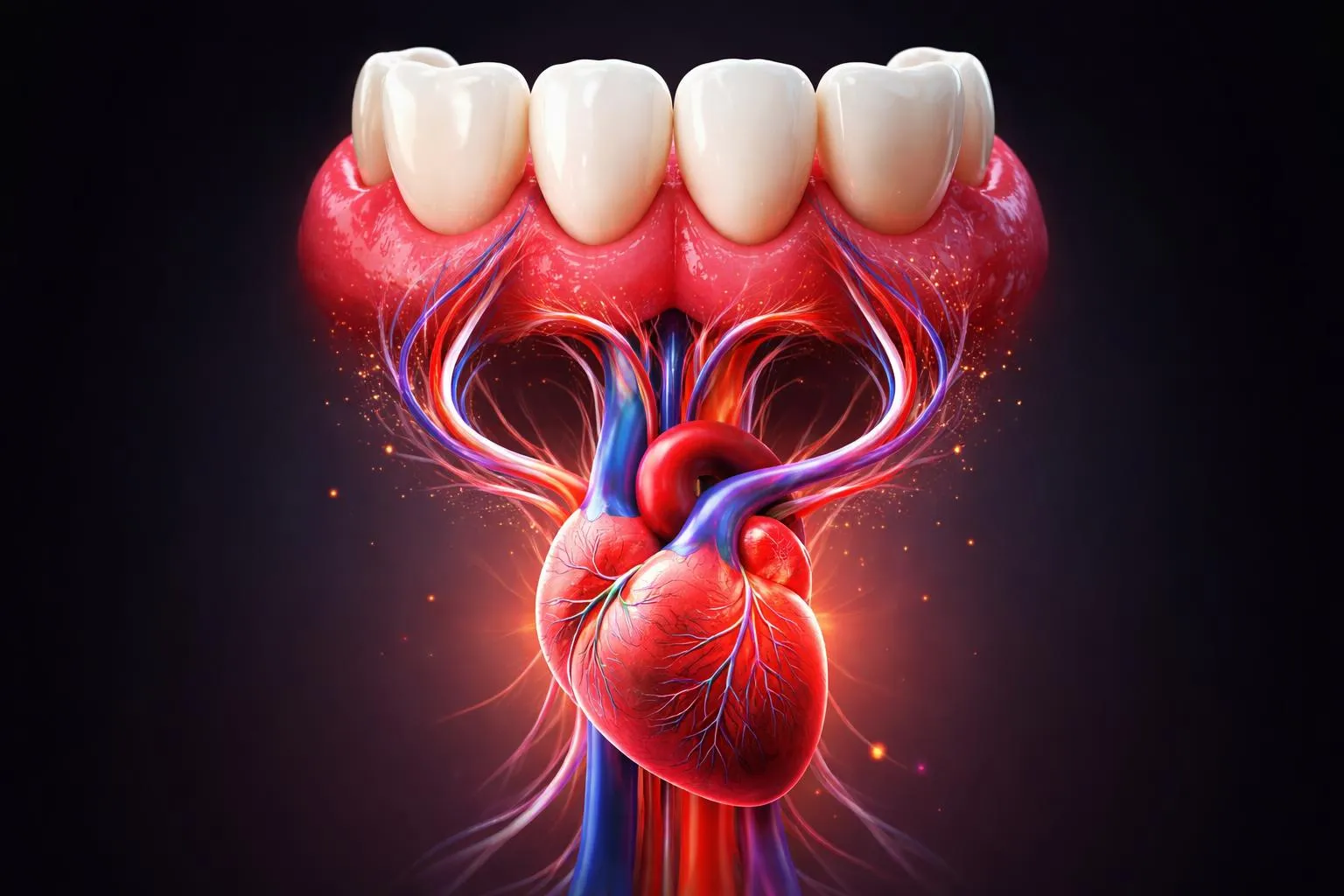
Most people think of brushing and flossing as a way to avoid cavities, bad breath, or expensive dental work. Fair enough. That is usually how oral health gets framed.
But there is a bigger story here.
Chronic gum disease, called periodontitis, does not stay neatly contained in the mouth. It can drive inflammation throughout the body, expose the bloodstream to harmful bacteria, and affect the lining of blood vessels. Over time, that matters for the heart and circulatory system.
I think this surprises people because gums seem local and hearts seem far away. In the body, they are not far apart at all.
Over the past two decades, research has kept pointing in the same direction: people with periodontitis face a higher risk of cardiovascular disease, including heart attack, stroke, and peripheral artery disease. More recent clinical trials add something even more interesting. When severe gum disease is treated intensively, vascular health markers can improve.
That does not mean flossing is a magic shield against heart disease. It does mean oral health belongs in the same conversation as blood pressure, cholesterol, smoking, diabetes, sleep, and diet. It is part of whole-body health, and it has been underestimated for a long time.
Periodontitis is a chronic inflammatory disease that damages the gums and the tissues holding teeth in place. It usually begins with plaque buildup and gum irritation. If that inflammation continues, it can move deeper below the gumline, affecting bone and connective tissue.
Early signs can seem easy to dismiss:
gums that bleed when brushing or flossing
persistent bad breath
swollen or tender gums
gum recession
teeth that feel loose or shift over time
When periodontitis progresses, bone loss can occur. In severe cases, teeth may be lost.
This is not a rare problem. It affects more than 40% of adults globally. So when we talk about gum disease and heart health, we are not talking about a niche issue. We are talking about something common enough to matter at a public-health level.
One reason periodontitis is missed is that it often does not hurt much in the early stages. People can get used to bleeding gums and treat them like a minor nuisance. I would argue that bleeding gums deserve the same attitude as recurring chest tightness or high blood sugar readings: not panic, but attention.
The link between periodontitis and cardiovascular disease is not based on one single theory. Several biological pathways appear to connect the mouth to the blood vessels.
Periodontitis is an inflammatory disease. That inflammation does not always stay local.
People with gum disease often have higher levels of inflammatory markers in the bloodstream, including C-reactive protein, interleukin-6, and tumor necrosis factor-alpha. These are not obscure lab curiosities. They are part of the body’s broader inflammatory response, and they have been linked to cardiovascular risk.
Atherosclerosis, the process behind many heart attacks and strokes, is not just a plumbing problem where arteries slowly clog. It is also an inflammatory process. When inflammation stays elevated over time, blood vessels can become more vulnerable to plaque buildup and damage.
This is one reason the oral-systemic link makes sense biologically. Chronic gum inflammation may add to the body’s total inflammatory burden.
The mouth contains a huge bacterial ecosystem. Many microbes are harmless in the right setting. Some are not.
In periodontitis, the tissues around teeth become inflamed and more permeable. Everyday actions such as chewing or brushing can allow bacteria or bacterial byproducts to enter the bloodstream. Researchers have detected periodontal pathogens, including Porphyromonas gingivalis, in atherosclerotic plaques.
That does not mean a single mouth bacterium causes a heart attack all by itself. The body is more complicated than that. But it does support the idea that oral infections may influence what happens inside blood vessels.
If the gums are chronically infected, the bloodstream may get repeated low-level exposure to microbes and inflammatory signals. Over years, that is not trivial.
The endothelium is the thin inner lining of blood vessels. When it works well, it helps regulate blood flow, clotting, and vessel relaxation. When it works poorly, that is often an early step in atherosclerosis.
People with periodontitis have shown impaired endothelial function in research studies. That is one of the more compelling pieces of the story because it ties gum disease to a measurable change in vascular health before a major event like a heart attack happens.
In plain language, unhealthy gums may be associated with blood vessels that are already under stress.
For years, some people dismissed the gum-heart link as a side effect of shared risk factors. That was a reasonable question. After all, smoking, age, diabetes, and socioeconomic factors can influence both oral health and cardiovascular health.
But observational studies kept finding an association even after accounting for many traditional risk factors, including smoking, age, and cholesterol. That matters. It suggests periodontitis is not just tagging along with other problems.
Still, association is not the same as causation. That is where intervention studies become useful.
Recent randomized controlled trials have shown that intensive periodontal therapy can improve vascular biomarkers. This is where the conversation gets more serious. If treating gum disease leads to better measures of vascular health, it becomes harder to argue that the mouth-heart connection is just statistical noise.
In trials involving otherwise healthy people with severe periodontitis, intensive treatment has been associated with several measurable improvements.
Carotid intima-media thickness, often shortened to cIMT, is a marker used to track changes in the carotid artery wall. Higher values can reflect atherosclerosis progression.
After intensive periodontal treatment, some studies found reductions in cIMT. That is a meaningful finding because it suggests the effects of treatment may reach beyond the mouth and into the arteries.
Another finding from intervention studies is improved endothelial function after treatment. Since endothelial dysfunction is an early warning sign in vascular disease, improvement here is encouraging.
It suggests that reducing chronic oral inflammation may help blood vessels work better.
Treatment has also been linked to lower levels of inflammatory markers and oxidative stress. This fits the broader theory: if periodontitis is acting as a chronic inflammatory source, treating it should reduce that burden.
One especially interesting point is that these vascular benefits occurred independently of changes in blood pressure, cholesterol, or weight. In other words, the improvements were not just because people happened to lose weight or improve another heart-health metric at the same time.
That does not prove periodontal treatment alone prevents heart attacks. Medicine rarely gives us simple, clean answers like that. But it does strengthen the case that gum disease is part of cardiovascular prevention, not separate from it.
Heart disease prevention often focuses on the usual suspects: tobacco use, high blood pressure, diabetes, cholesterol, inactivity, and diet. Those are still central. No one should pretend gum care replaces them.
But prevention works best when it looks at total risk. Chronic oral inflammation may be one more upstream factor that quietly pushes vascular disease forward. If so, leaving it out of prevention plans means leaving an avoidable burden in place.
This is where current care falls short.
Many medical visits do not include even basic questions about gum bleeding, loose teeth, or past periodontal treatment. At the same time, dental visits may not routinely include questions about hypertension, diabetes, family history of heart disease, or prior stroke. The result is a split system where the mouth is treated on one side and the rest of the body on the other.
Patients are left to connect the dots themselves. Most shouldn’t have to.
Some gum symptoms are easy to normalize because they are common. Common does not mean harmless.
Pay attention if you notice:
bleeding when brushing or flossing
gums pulling away from the teeth
persistent bad breath
tenderness or swelling along the gumline
teeth that feel loose
changes in how your bite fits together
If these symptoms keep showing up, it is worth getting a proper dental evaluation. Waiting for pain is a bad strategy with periodontitis because damage can build quietly.
This matters even more if you already have cardiovascular risk factors such as diabetes, high blood pressure, high cholesterol, smoking history, or a family history of early heart disease.
The good news is that oral health is not mysterious. The basics still matter, and they matter more than people think.
Brush twice a day with fluoride toothpaste. Clean between teeth with floss or interdental cleaners. The exact tool matters less than whether you actually use it well and use it regularly.
A lot of people aim for perfect and end up inconsistent. Consistent beats perfect here.
Healthy gums generally do not bleed with gentle brushing and flossing. If they do, do not shrug it off. Bleeding can be an early sign of inflammation that deserves attention before it turns into deeper tissue damage.
Routine dental visits help catch gum disease earlier, when it is easier to manage. Professional cleanings and periodontal evaluations can identify pockets, bone loss, and recession that are hard to judge at home.
Symptom relief is not enough. Mouthwash and occasional cleanings will not reverse advanced periodontal disease on their own. If you are diagnosed with periodontitis, ask about comprehensive periodontal therapy and follow-up maintenance.
That may include deep cleaning below the gumline, ongoing monitoring, and home-care changes tailored to your condition.
Tell your dentist if you have diabetes, high blood pressure, elevated cholesterol, a heart condition, or a strong family history of cardiovascular disease. Tell your physician if you have chronic gum disease, frequent gum bleeding, loose teeth, or recent periodontal treatment.
That kind of information sharing sounds small. It is not. It helps each clinician see the whole picture.
This issue is not only on patients.
Medical clinicians can add a few simple oral-health questions to routine risk assessments, especially for patients with diabetes or cardiovascular risk. Questions about gum bleeding, tooth mobility, dental attendance, and prior periodontal treatment are not difficult to ask.
Dental professionals can do more cardiovascular screening awareness, too. If a patient has obvious risk factors or reports uncontrolled hypertension, diabetes, or concerning symptoms, referral back to medical care makes sense.
Bidirectional referral should be normal. Right now, it often depends on individual clinicians rather than standard practice.
That is a missed opportunity.
Because periodontitis is common and cardiovascular disease is common, even a modest connection between the two has big implications.
Public-health campaigns have spent years teaching people that smoking affects the lungs and salt intake affects blood pressure. Oral health deserves similar integration into chronic disease prevention. Heart-health messaging that ignores gum disease leaves out a real, modifiable factor.
Including oral-health metrics in broader prevention strategies would help. So would public campaigns that explain, clearly and without scare tactics, that bleeding gums are not just a dental issue.
People do not need more guilt. They need better information.
The mouth is not separate from the rest of the body, even if healthcare systems sometimes act like it is.
Periodontitis is a chronic inflammatory disease with effects that can extend beyond the gums. Research links it to higher cardiovascular risk, and treatment appears to improve vascular markers such as endothelial function, inflammation, oxidative stress, and carotid artery thickness. That is enough to take the issue seriously.
If your gums bleed, recede, or feel persistently inflamed, do something about it. If you are already thinking about heart health, include your oral health in that plan. And if you are a clinician, ask one more question about the mouth than you asked last year.
Sometimes prevention is dramatic. Often it is not. Often it looks like a dental visit that happened on time, a gum problem treated properly, and one less source of chronic inflammation wearing down the body in the background.
That is not glamorous. It is just good health care.
Get Started Today
Your oral health matters. Whether you’re visiting for preventive care or urgent treatment, our experienced and caring team is here to help.
.svg)